Dr. David Galiani, an experienced ophthalmologist with more than 25 years in the field, has treated thousands of patients with cataracts at Galiani Ophthalmology Associates. His deep understanding of the root causes of cataracts and his ability to treat them with high-tech approaches are just a few of the reasons he’s widely respected as an elite cataract surgeon in Reading and Doylestown, Pennsylvania.
This month, our blog explains how cataracts develop and helps you recognize early symptoms.
The Role of the Eye’s Natural Lens
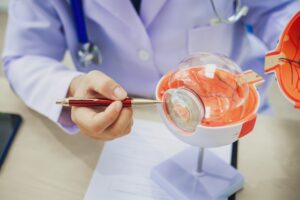
Your eye lens is a transparent, flexible structure located behind the iris and pupil. Its job is to focus light onto the retina, the light-sensing cells at the back of your eye. This is what allows you to see sharp images at varying distances.
Over time, the proteins in the lens can begin to break down. The proteins then clump together. These clumps scatter light instead of letting it pass through cleanly, causing vision to appear cloudy, hazy, or blurred.
This clouding process marks the start of cataract formation.
In the early stages, you may notice mild glare, difficulty reading small print, or reduced night vision. As the lens becomes increasingly opaque, these symptoms progress, often making tasks like driving or reading more difficult.
What Causes Cataracts to Form
It’s normal for the eye lens to change as you age, so the passage of time is often the main factor in cataract development.
Other factors, such as ultraviolet (UV) light exposure, smoking, diet, certain medications such as steroids, and previous eye injuries, can all contribute to or accelerate lens changes.
These problems usually develop gradually, taking decades to become noticeable, which is why cataracts are so common after age 60.
Some people are genetically predisposed to developing cataracts earlier than others. Although far less common, some people may develop cataracts as a result of eye trauma.
How Cataracts Progress
Cataracts typically develop slowly, and progression rates vary from person to person. In most cases, changes occur over many years; in others, clarity declines more quickly.
Regular eye exams are key to monitoring these changes. Advanced diagnostic imaging allows ophthalmologists like Dr. Galiani to detect early signs before symptoms affect daily life.
As cataracts worsen, surgery is the only way to restore clear vision. During the procedure, Dr. Galiani removes the cloudy lens and replaces it with a clear, artificial one. This modern approach provides excellent results with quick recovery and improved vision quality.
Cataract Care in Reading and Doylestown, PA
If you’ve noticed cloudy or blurred vision, it may be time for an evaluation. Schedule your consultation with Dr. Galiani by calling Galiani Ophthalmology Associates today. Call 610-376-1981 in Reading or 215-345-5144 in Doylestown to book an appointment.